STRATA
A smart-home weather device. It fosters connection between long-distance friends. I was responsible for physical prototyping and programming functionality.
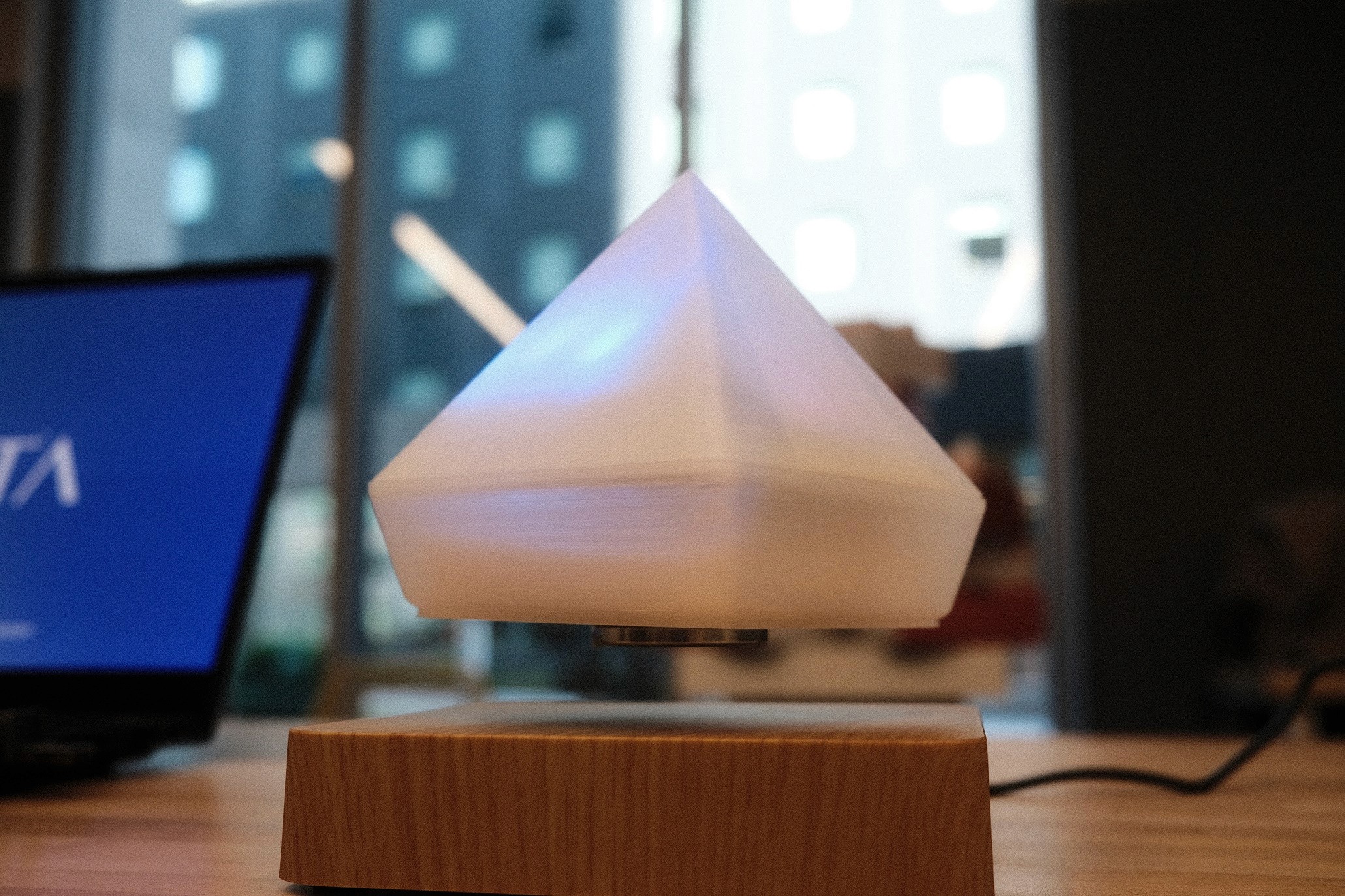
Prototype device floating magnetically and simulating rain patterns based on internet weather data.
OVERVIEW
“Strata” is a prototype floating smart-home device with wi-fi enabled functionality. The deliverables included a physical working product that would be demonstrated to stakeholders.
Time Frame
2024 | 10 Weeks
Objective
Develop a prototype for a smart-home product that appeals to the core human driver of connection.
My Roles
UX Research, Programming, Prototyping
Ideated and developed a physical prototype with Arduino.
Programmed wi-fi and light pattern functionality in C++
Iterated on the physical form factor with help from other team members.
Communicated with an exterior motion media design team to ensure consistent branding.
IDEATION
Value Proposition
Strata is a smart-home device that focuses on fostering connection between distant friends and relatives.
We were given a list of core human emotional drivers. Our four-man group was assigned the driver of “human connection”. After some research, we got to work on our proposal, which included some simple personas and a product concept.
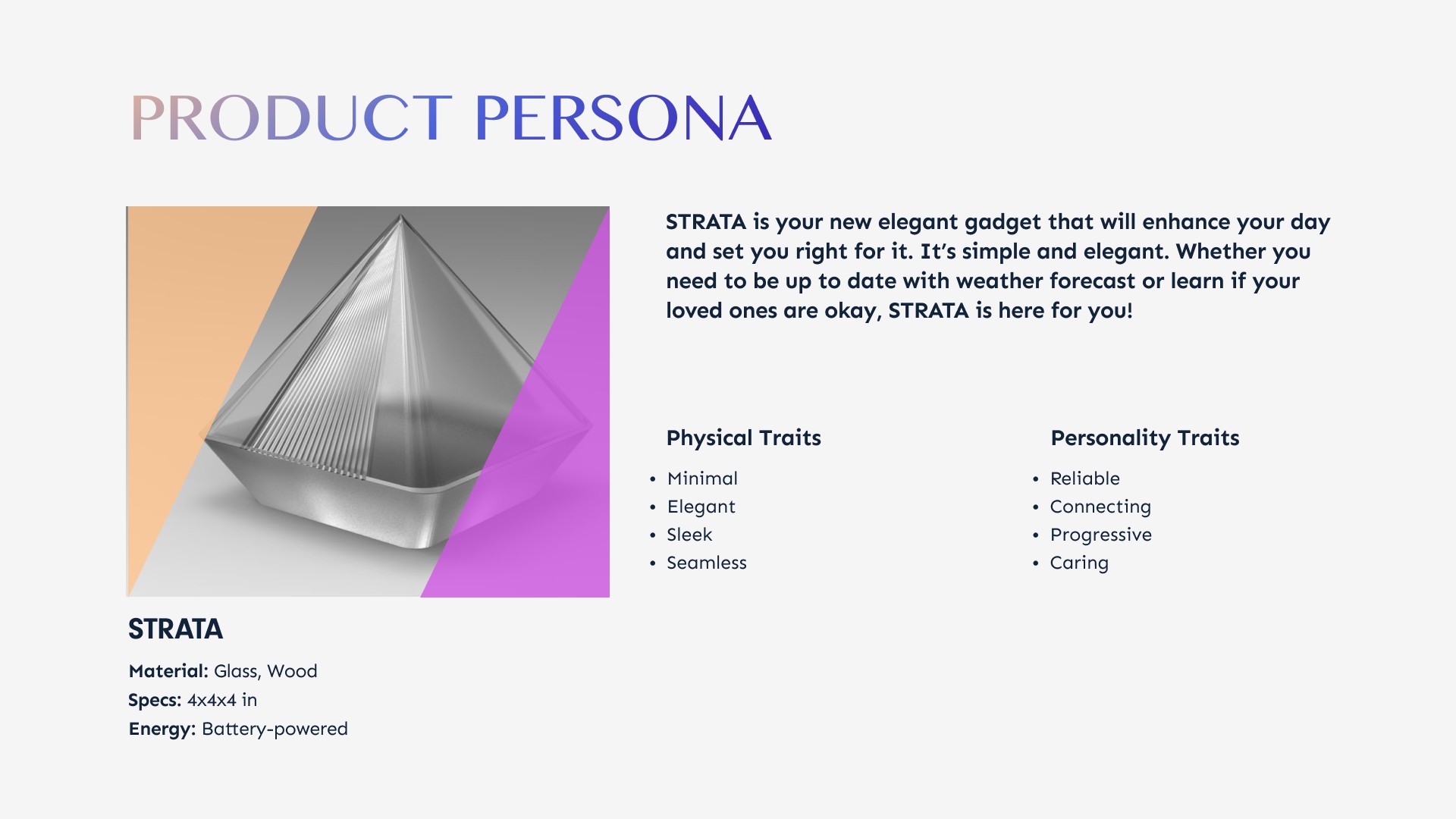
The form factor was originally meant to be an orb. Based on feedback, the shape was changed to be more sleek and visually intriguing
Since this project involved a physical prototype, there were a lot of physical deliverables, including a 3d-printed model of the casing, which underwent several changes. There was also a chip that could pull weather data from the internet. Later on in the quarter, we altered the device to allow it to float using magnets.
BRANDING
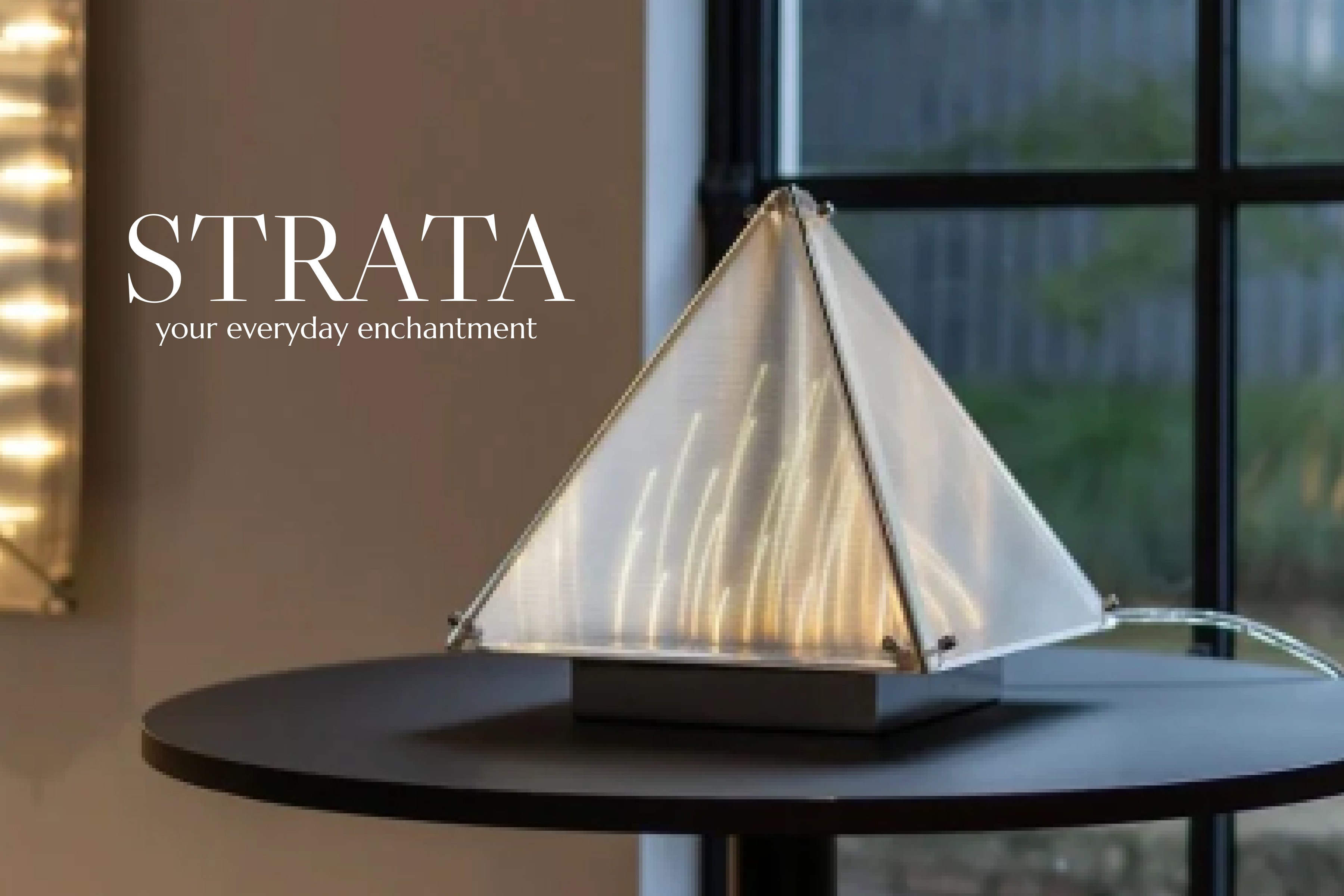
Early branding material
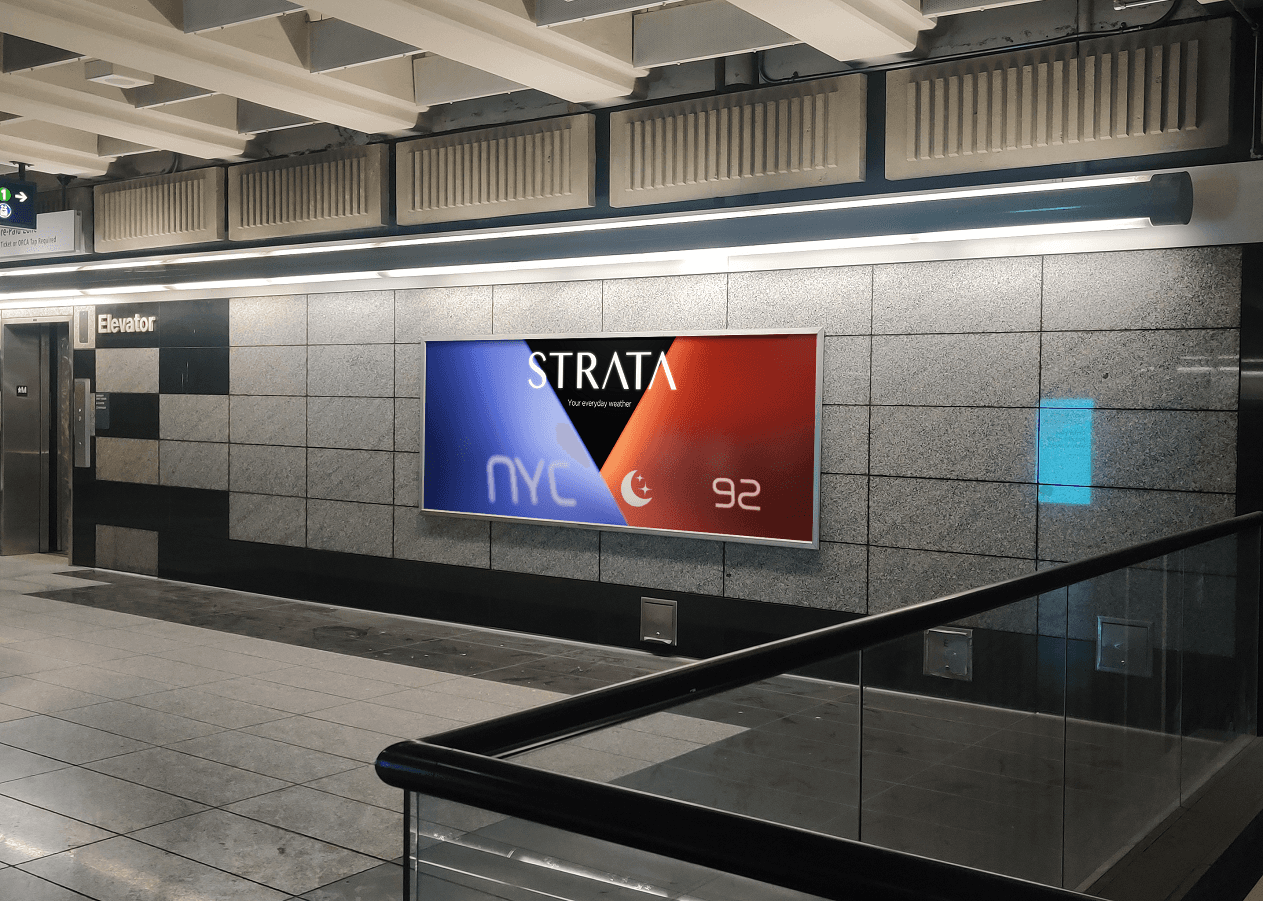
Our team worked to brand and market the product, and develop a visual identity/language for the promotional material. Our team also worked in tandem with a Motion Media team to produce the trailer seen at the beginning of this segment.
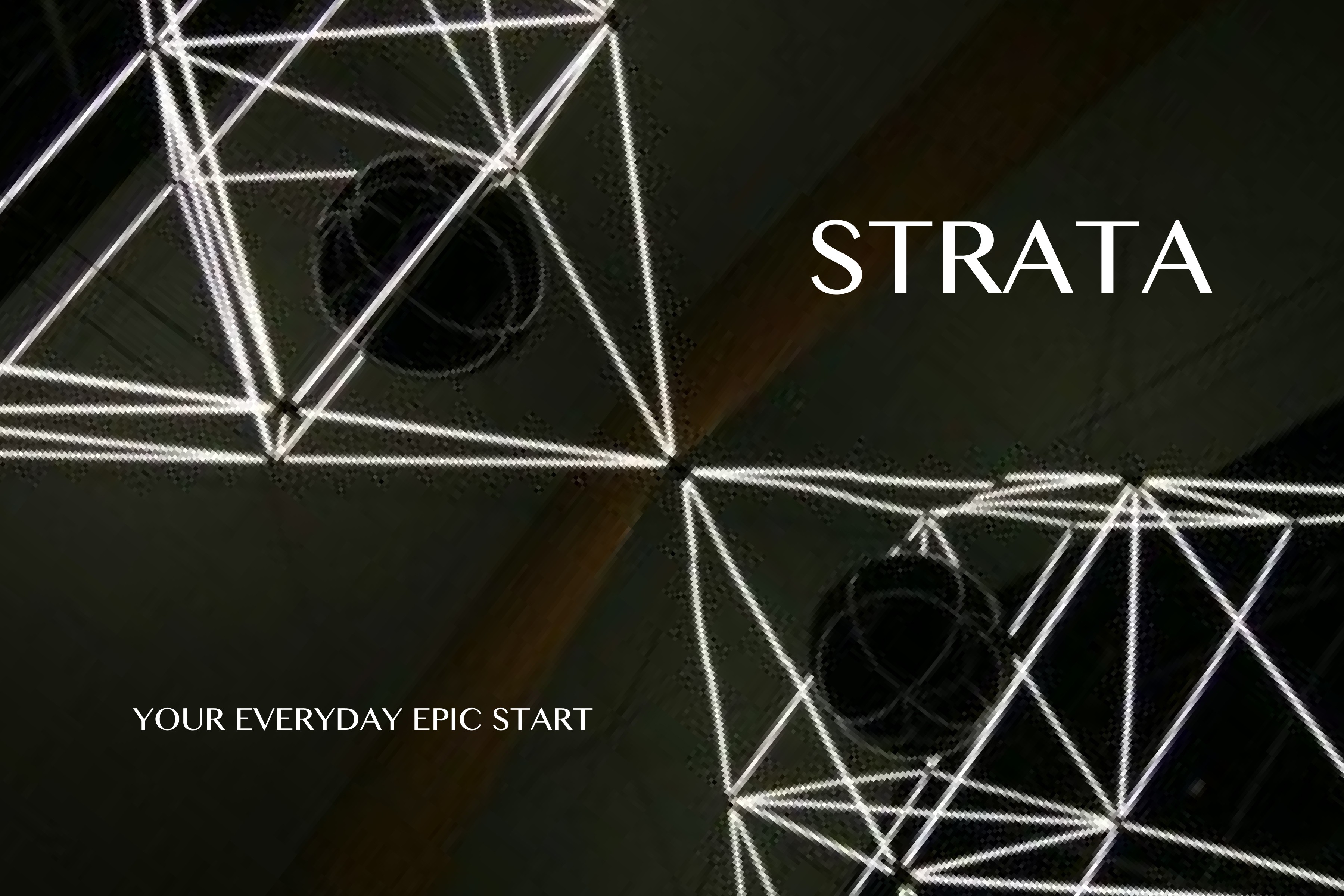
Early branding material
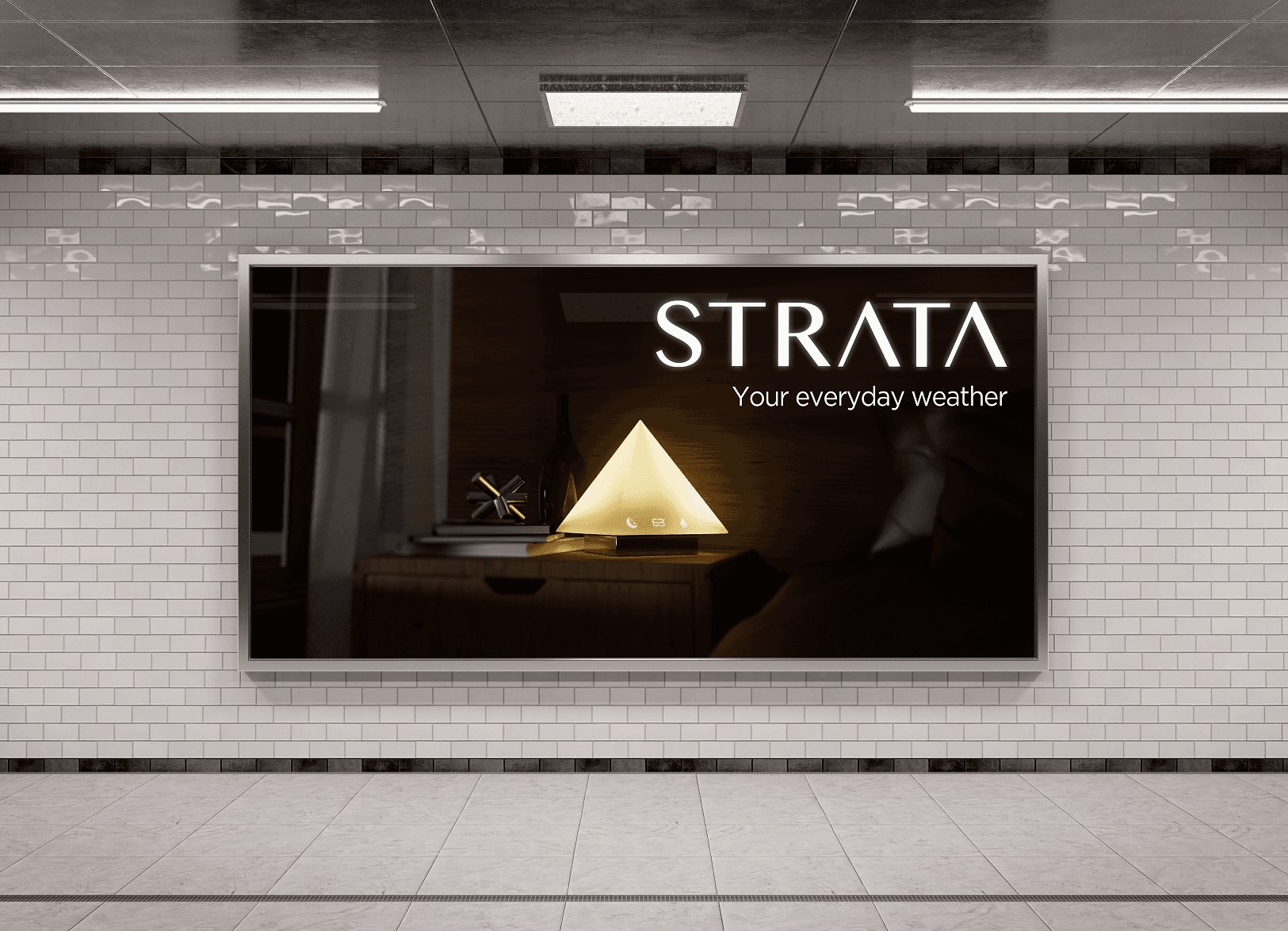
Finalized branding material
PROTOTYPE
Physical
To get the prototype floating, we bought an electromagnetic vase and repurposed its components. One of the more difficult challenges was getting the floating pyramid to use battery power so it wouldn't need a second wire.
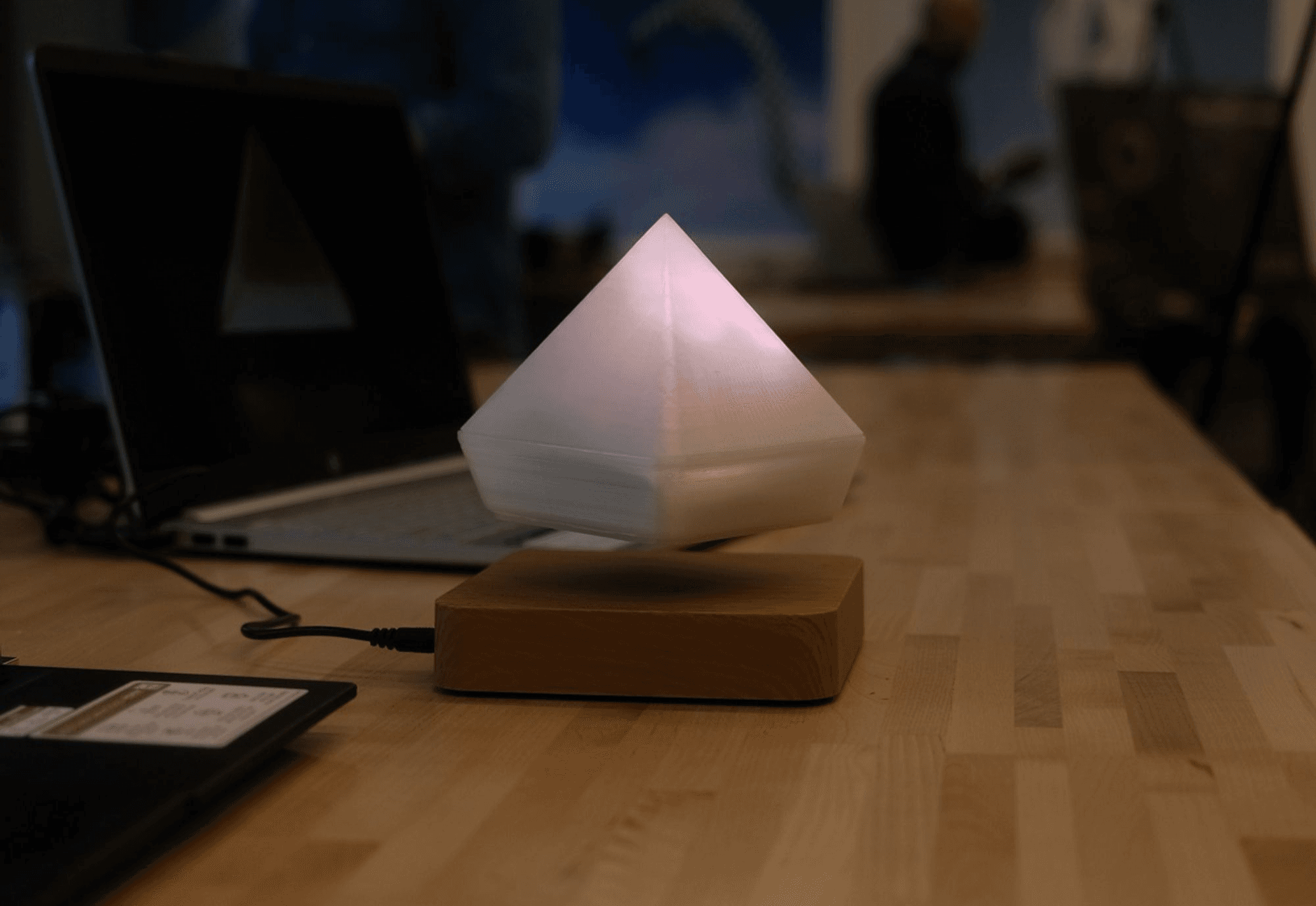
Prototype device on testing day
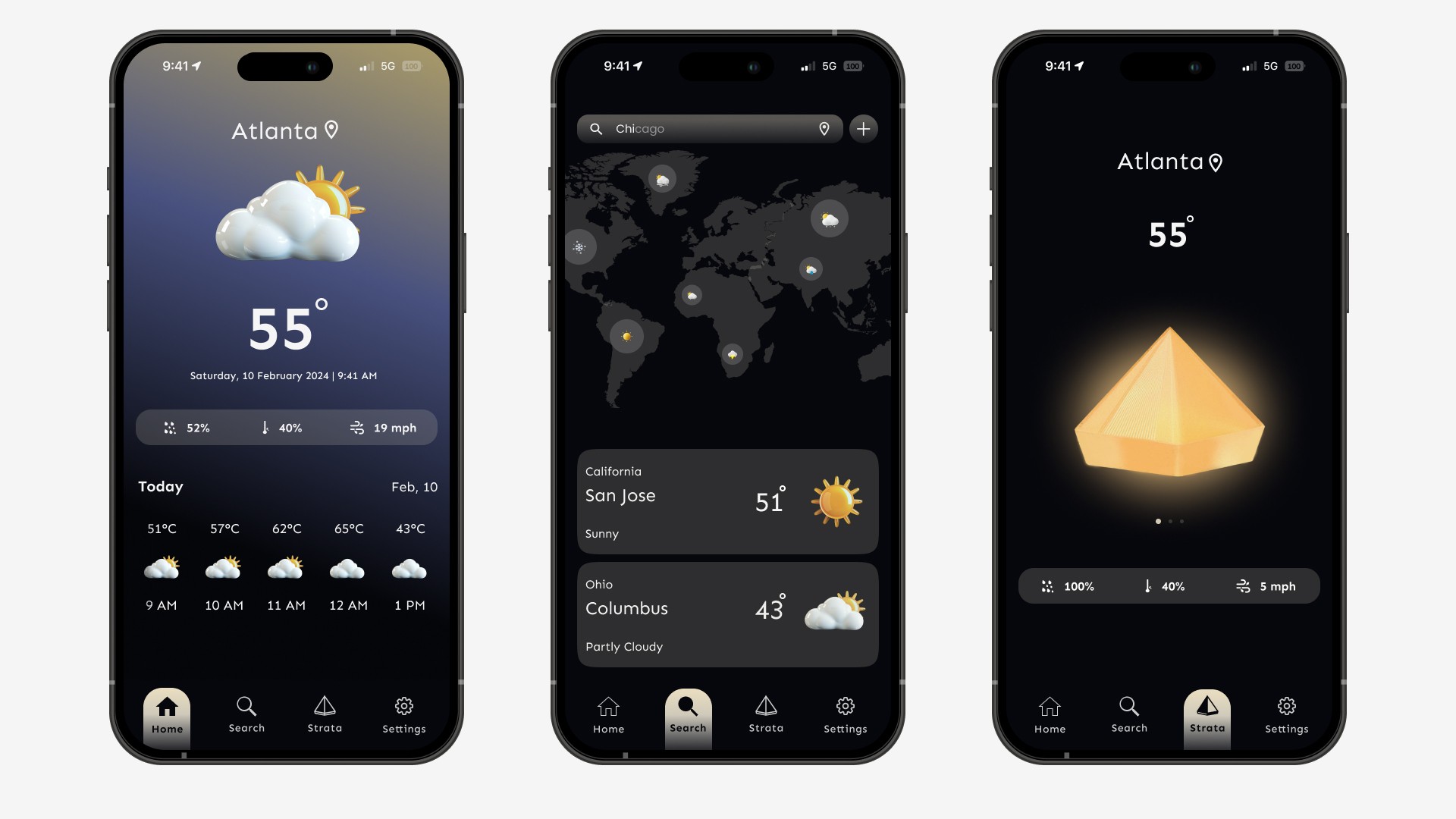
Accompanying app design
Back End
I was responsible for programming and uploading code. The software enabled the ESP 32 chip to read information from weather.gov and also manipulate various light patterns.
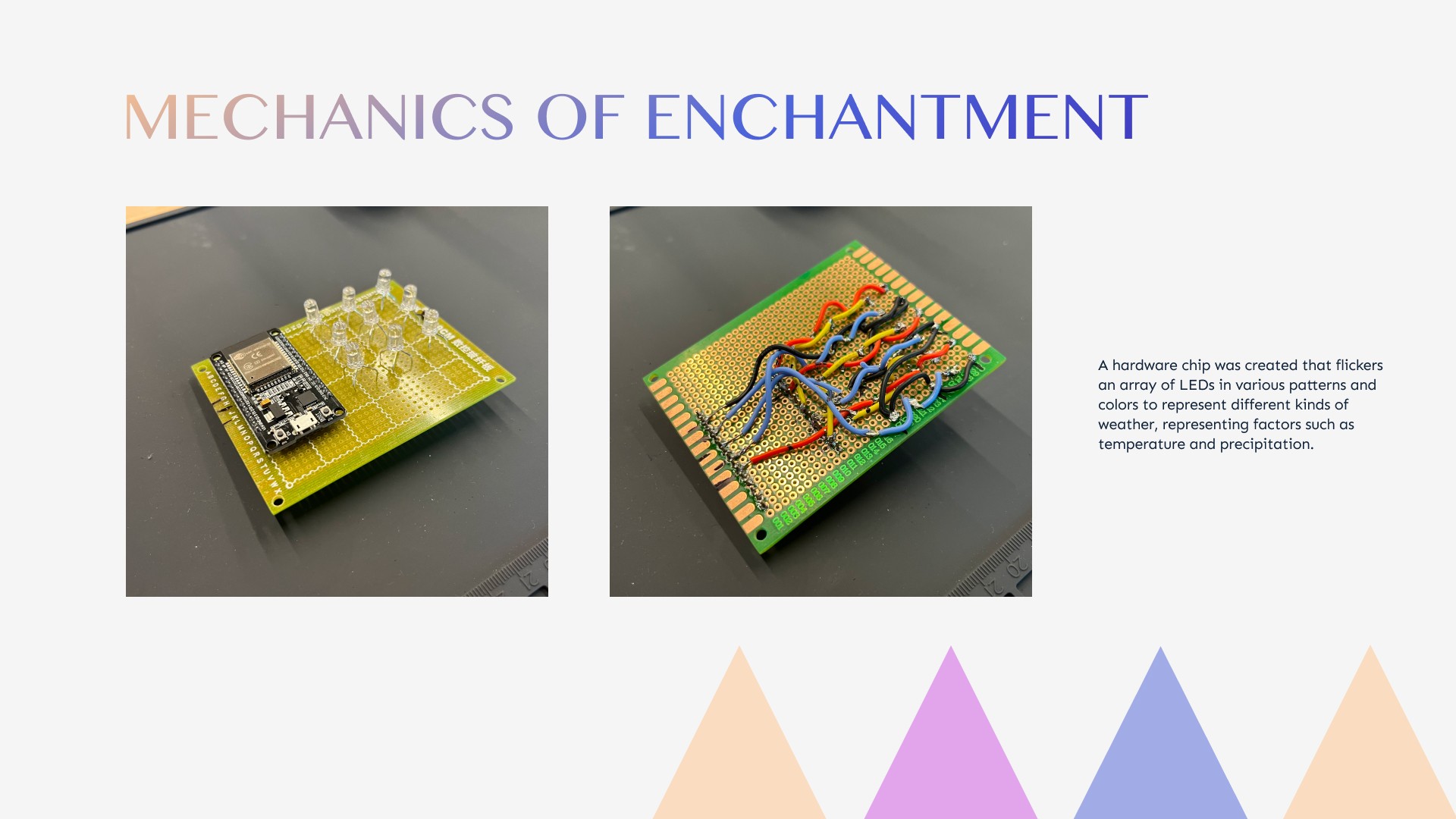
ESP 32 chip and soldering. I uploaded code that enabled it to connect to weather.gov and parse for weather information.
USER TESTS
At the end of the quarter, our team gauged reactions to our product in a "science fair" styled setup alongside some other teams.
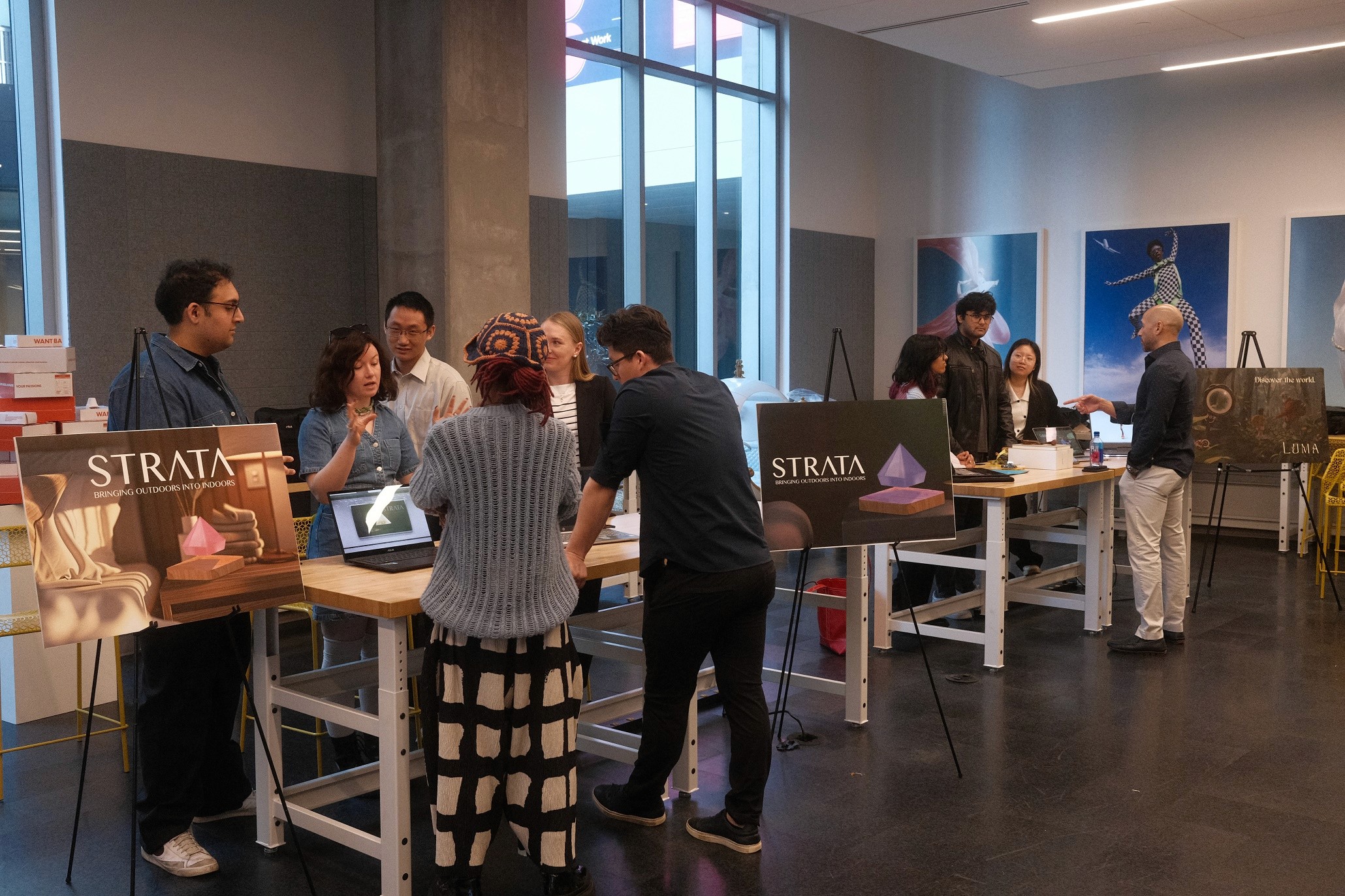
User test area
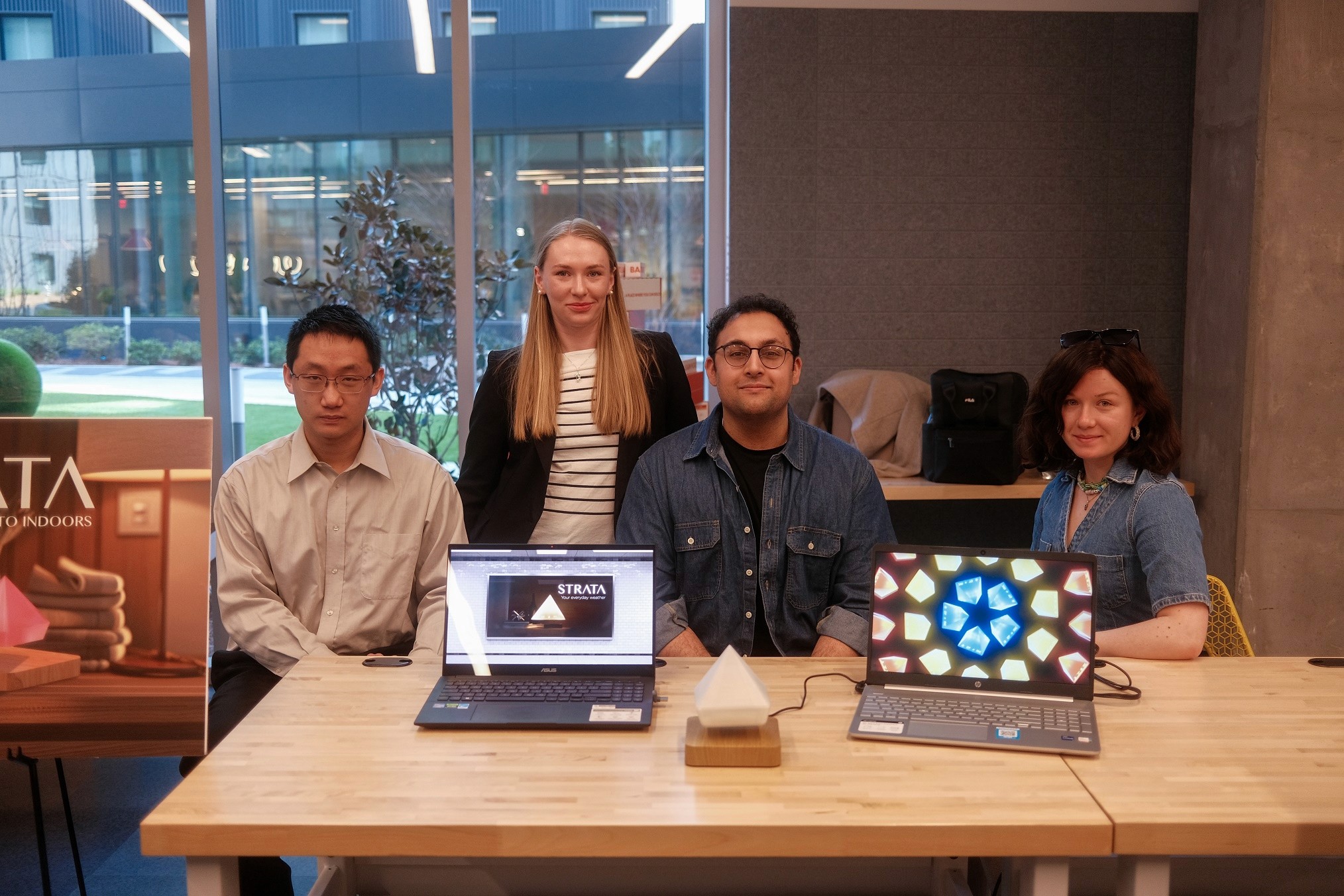
Strata team during user testing
TAKEAWAYS
I had worked with Arduino wi-fi before, but I had never used it to create a soldered portable device that had to be within a certain weight capacity, not to mention the fact that it could float. There were also unexpected challenges, such as figuring out how to make it rely on battery power.
My team came from varied fields, such as Industrial Design and Graphic Design, and it was enlightening to work with them. Since we only 10 weeks to work on this project, it came to a close at that time, but if we had been given more time, we would have used it to conduct more rounds of research and iteration on the design.